The Bans Raise Questions Over Free Speech, National Identity, and Democratic Legitimacy
The UK government’s decision to bar seven foreign activists and commentators from entering Britain ahead of the May 16 “Unite the Kingdom” rally, organised by Tommy Robinson, has ignited a wider political debate extending far beyond the streets of London. While Prime Minister Keir Starmer defends his bans as a necessary stand against “extremism” and “racial agitation”, others point out the bans exacerbate growing tensions in Western democracies over free expression, national identity, and the limits to political dissent.
With other words: those whose opinions do not fall within a controlled spectrum, are curtailed and outright banned. This is a brute power move showing that the ruling powers in Britain care not about what moral and political backlash this might create. It is an important issue to consider – especially regarding what US Vice President J.D. Vance already pointed out last year, that European governing elites are losing touch with what it means to cultivate a diverse landscape of opinions and world-interpretations.
Repressed unwanted opinions
Leftist opinions – even radically left ones – seem to be perfectly okay, and controlled opposition mainstream right opinions are also condoned by the established institutions. But those mainstream right-wingers are – as Johannes M. Koenraadt also identified and as I described in my new book – like the homosexuals in the novels by Proust; exchanging fleeting glances in a hope of finding recognition, whilst never showing what they really think, lest they be ousted as ‘nationalists’, ‘xenophobes’, ‘islamophobes’, etcetera. Monikers used by mainstream institutions to demonize and ostracize anyone they disagree with.
The rally Robinson organizes is expected to attract tens of thousands of patriotic demonstrators concerned about immigration, crime, cultural change, and what participants describe as the erosion of British identity. Government officials, however, characterize many associated figures as “far-right agitators” whose rhetoric risks inflaming racial tensions and public disorder.
Victims of the Bans
Among those barred from entering the UK are American commentators Joey Mannarino and Valentina Gomez, Dutch activist Eva Vlaardingerbroek, Spanish influencer Ada Lluch, and Belgian parliamentarian Filip Dewinter of the Flemish nationalist party Vlaams Belang. The Home Office stated that their presence would not be “conducive to the public good”. Given that previously granted travel authorizations were revoked, the act is, a brute move of state power to disincentivize disagreement with established narratives.
One reason that makes the rally of 16 May such a heated phenomenon, is that it coincides with the Pro-Palestine Nakba Day March. Then there is the FA Cup Final at Wembley: this high-profile football match takes place on the same weekend, adding to the pressure on police resources.
The controversial bans are politically significant not merely because of the individuals involved, but because of what they signify in a broader transatlantic context.
Western Identity under Attack
At the center of this debate lies a growing awareness in Europe and North America that ordinary citizens are losing influence over the cultural trajectory and demographic future of their nations. Concerns surrounding mass migration, integration, religious tensions, national cohesion, and declining trust in political institutions have increasingly become defining issues for national-populist movements.
Supporters of the banned speakers know that these anxieties – whether one agrees with them or not – reflect genuine democratic concerns shared by millions of citizens. Governments tend to dismiss such concerns as inherently extremist rather than engaging with them politically in an earnest, sincere way.
This means that a basic premise of democracy – an open and fair exchange of ideas – is overthrown by those claiming to protect democracy from “populists”. Critics of the bans warn that suppressing controversial voices just deepens polarization. This is so because the bans make clear that establishment institutions are unwilling to tolerate dissent on immigration and national identity. Anyone who even raises concerns about these topics – be it in a democratic way – is promptly framed as “an opponent of democracy itself”. This is truly a lose-lose scenario with no way out.
The rhetoric used by some of the banned activists might be perceived as inflammatory by some. Government officials maintain that Britain has both a legal and moral responsibility to prevent individuals from importing sectarian hostility into an already tense political climate.
Democratic Representation
Yet the inclusion of elected politicians among those barred has introduced a more complex constitutional dimension. Filip Dewinter is not simply a social media influencer but a democratically elected member of the Flemish Parliament in Belgium, representing a party that commands substantial electoral support. His exclusion raises difficult questions about how liberal democracies distinguish between “extremist incitement” and democratic representation.
The honest answer – that is the product of a carefully researched academic work, written down in my new book What the World Can Learn from the Fall of the West (Academica, 2026), is that the governing powers bluntly do not care about said ambiguity. They will repress simply because they can, and because it buys them time. Time to govern, to wield power, to reshape culture and to benefit from the influence and privileges that come with being in control of the state. An ultimate clash between governors and governed may be inevitable, but they simply gamble on the fact that this will not happen during their individual terms of office.
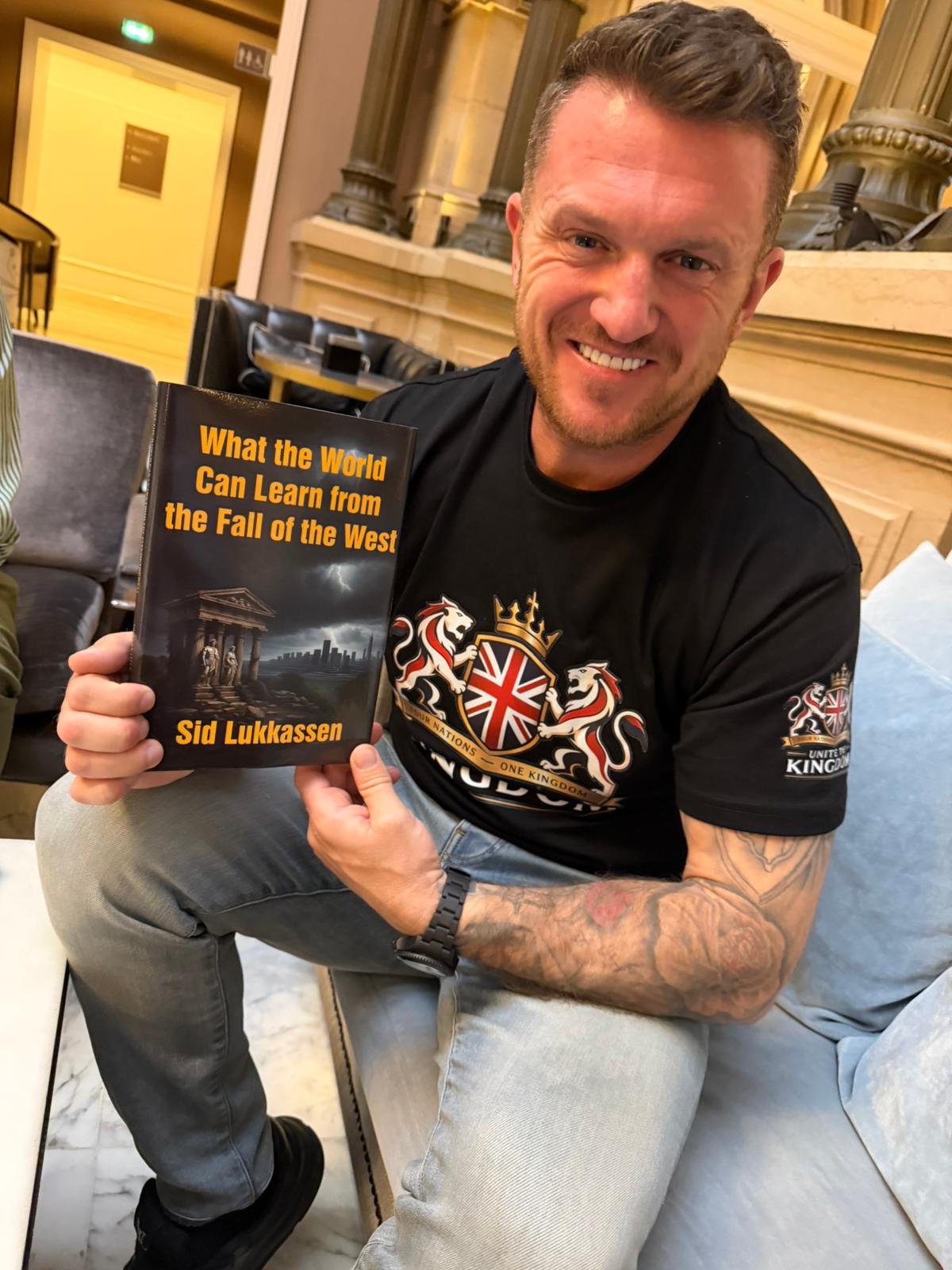 The 16 May rally is thus apocalyptic in two senses. Firstly, because it combines three controversial events on a single day and stretches the containment capacity of the authorities to the max. Secondly, because the outright repression shown in the bans, is a premonition that even harsher clashes between governing and governed await Britain in the future. It shows the UK establishment has a blatant disregard for the issues that currently mobilize people. This is bound to ramp up tensions and to drive them even deeper, so that they become even more internalized.
On top of this, the issue carries diplomatic implications. Several of the banned figures are closely aligned with the broader international populist movement surrounding Donald Trump and Europe’s nationalist right. The bans are thus bound to hurt Trump-aligned conservatives in the US, where debates over censorship, deplatforming and restrictions on political expression are central political themes. For many within that movement, Britain’s ban demonstrates again that Western governments are becoming more comfortable using institutional authority to restrict ideological opponents under the banner of “combating extremism”.
Attack on social cohesion
Supporters of Starmer’s government reject that characterization entirely. They say the issue is not political disagreement but public safety and social cohesion. From their perspective, the state has a legitimate responsibility to prevent the importation of inflammatory rhetoric that could contribute to unrest, especially amid rising communal tensions and increasingly volatile demonstrations across Europe.
But that approach inevitably breeds paradoxes. For instance, the ambiguous effects of Islam upon social cohesion in Western nations, are not allowed to be discussed because that discussion itself is considered bad for social cohesion… As stated before, there is just no way out of this, other than to double down upon repression and thus kick the can down the road.
Pain driven underground
Thus, whether you approach the bans from a right-wing or left-wing perspective: what Jürgen Habermas once advocated as a “neutral and open discussion as a defining feature of democracy” is dead and buried. Now that painful topics cannot be discussed in public environments – and certainly not in a fair and objective manner – resentment will grow beneath the surface of that facade of a ‘public debate’. That is, until people feel they have nothing left to lose, and then there will be riots.
An overwhelming challenge for democratic regimes is thus one of balance: how to preserve open political debate on sensitive issues such as immigration and cultural identity, without sliding democratic discourse into ethnic hostility and collective demonization. On the topic of Israël and Judaism, this collective process is already ongoing…
Fall of the West → Winter of the West
The controversy surrounding the May 16 rally ultimately reflects a deeper struggle unfolding across the Western world. It is a conflict not only over borders and migration policy, but over who gets to define national identity, which opinions remain within acceptable democratic boundaries, and whether governments can suppress divisive political movements without fueling the pain that drives them.
The painful paradox is that they probably cannot, and thus – in my analysis – the Fall of the West is truly the prelude to the Winter of the West. The best course of action would be for democratic governments to engage with the protestors in a constructive dialogue about the future of their shared nation. Because entrance to the ruling class currently happens through adherence to far-left dogma, the ruling elites will not allow themselves this option. Further escalation is thus inevitable.
Support Sid via BackMe: https://sidlukkassen.backme.org/
Follow him via Telegram: https://t.me/SidLukkassen
Follow his email newsletter: https://www.sidlukkassen.com/
Follow his X-account: https://x.com/Sid_Lukkassen
Hier kan je reageren op onze artikelen en een inhoudelijke bijdrage leveren. Lees ook even onze huisregels.
Om te reageren dien je eerst aan te melden.
Reageer je voor de eerste keer? Registreer je dan hier.