Many have asked for a clarification of Sids new crowdfunding project in English. Not only that: Sid actually encourages his English-language followers to come through, to raise enough funds to make it. The title of this project is “Zin in Chaos”, with ‘zin’ being an ambivalent word in Dutch, which means ‘sense’, ‘significance’ and ‘meaning’ but also ‘appetite’. So it means, “an appetite for chaos” but also: “Finding meaning/significance in chaos”. It expresses the ambivalence of lived joy when the bureaucratic constructions of the surveillance state begin to collapse, and of the philosophical quest to find meaning in turbulent times.
It truly is a great title that expresses so much about today’s day and age. It is really important that this book is born, that it comes into being!
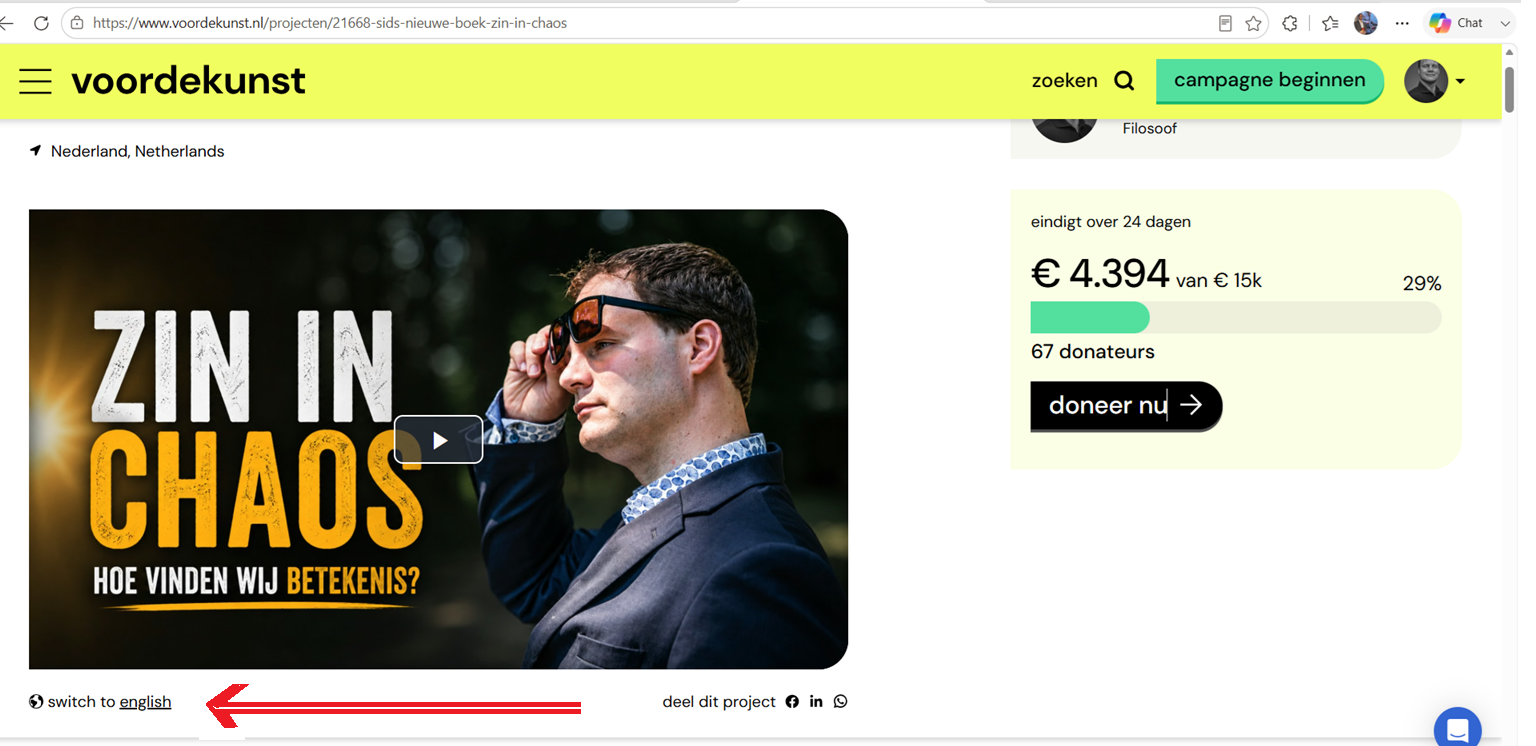
For that, Sid needs you, and you can support the project on this website, hosted by VoorDeKunst. Open the link and click on “switch to English” beneath the video.
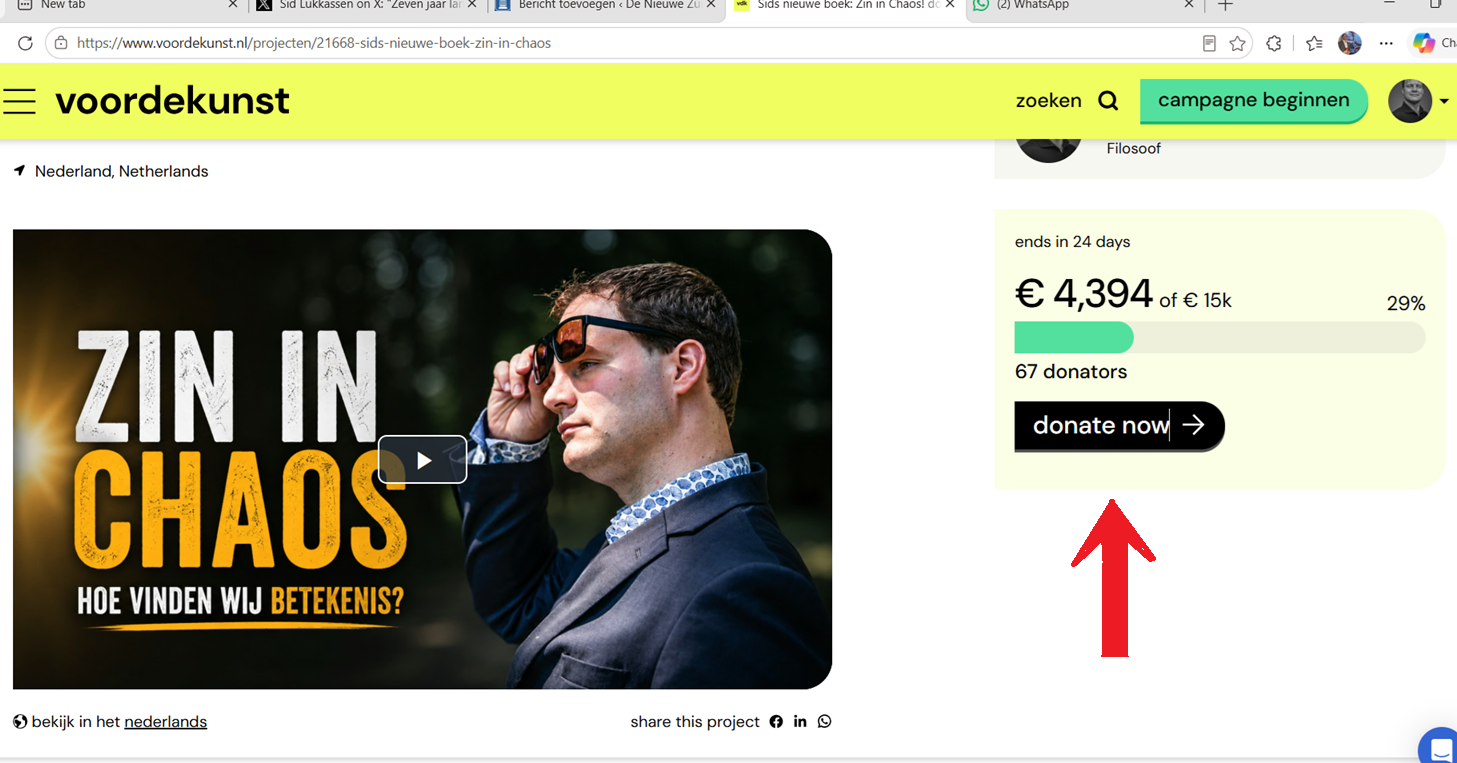
Then you can click: donate, and things should work out from there.
For your convenience, I have included the translation of the entire crowdfunding page for you, here:
Meaning Amid Chaos is the title of a book I intend to write. In this age of tension and confusion – both social and geopolitical – many people are searching for firm ground to stand on. This raises theological, spiritual, philosophical, and existential questions. Where do we find purpose and meaning? Many are wrestling with these questions now that our social and economic reality has become so turbulent.
The way I have structured this project also makes it possible to personally sign every copy before it is delivered. That is one of the advantages of this approach.
As someone holding a doctorate in philosophy, I feel deeply called to engage with these questions – to reach beyond what appears to be our society’s decline in search of something timeless, something that can serve as a philosophical foundation for life. In this book, I want to explore these themes through a descent in six stages, gradually examining the question of meaning in philosophical depth. I hope to make this possible with the financial support of the public.
If I am to be valued as a writer who identifies society’s deepest wounds – and who seeks hope and points of orientation against that backdrop – that recognition and support must come from the people themselves. From established institutions, one can unfortunately expect resistance rather than support.
I also intend to organize a major event in the Netherlands where the book will be presented, and I would likewise welcome the opportunity to hold a presentation in Flanders. It would be a place where those who share these analyses and sentiments can meet one another and experience a sense of shared destiny.
Although I will certainly strive to make the reading as accessible as possible, it will nonetheless require serious intellectual engagement. In short, it is an ambitious project that I am delighted to present to potential supporters.
The central question is simple:
How do we find meaning in a chaotic age?
When it comes to technology and surveillance, the trajectory we are currently on points toward a profoundly dystopian future. And if we also take into account cultural tensions and demographic developments, the outlook becomes darker still. That is why we must turn to profound thinkers – figures whose work we will explore throughout this book. Thinkers such as Walter Benjamin and Oswald Spengler, and all that they endured. And further back still, to Marcus Aurelius – the moral philosopher of a crumbling Roman Empire. Their writings offer enduring lessons that remain strikingly relevant to our own disheartening age.
Below I outline the six stages through which the question of meaning will be explored.
Following the introduction comes a personal letter addressed to Joris Bouwmeester, co-author of my book House of the Muse (2024). The remainder of the book will not take the form of letters. This opening letter is necessary because philosophy cannot truly begin until lived experience has first been crystallized. Without that personal layer, everything becomes abstract – and what remains abstract seldom touches the reader.
Part I revolves around Viktor Frankl’s central question: How does a human being find meaning in suffering?
The personal letter continues into a series of autobiographical reflections – about a man I once encountered, about what it costs to think honestly within a mass culture, and about the true value of freedom.
Part II poses the question every philosopher must eventually ask:
What, exactly, is this world in which we suffer?
Here I explore the unknowable: the abyss, philosophical reflections on finitude and infinity, spirit and matter. Not to overwhelm the reader with metaphysics, but because the meaning we seek cannot be separated from what we are capable of knowing about the reality we inhabit.
Part III introduces God and myth.
For if the world is ultimately unknowable, then an ancient question becomes urgent once more: Does the story of God still have something to offer us, or have we moved beyond it?
Central to this section is the legacy of Descartes – the separation of reason and faith that has left modern humanity suspended between two worlds without knowing how to reconcile them.
Part IV examines the political consequences of the search for meaning: universalism, Cultural Marxism, and the geopolitical implications that follow from them.
For the search for meaning inevitably leads to questions about what kind of society we wish to become, what sort of culture belongs to that society, and how such a culture can be carried forward with conviction.
Part V offers a diagnosis of the present.
Mindfulness as the opium of the people.
The degeneration of the contemporary novel.
The banality of evil as it manifests itself today.
What do you see around you? Which symptoms do you recognize?
Here philosophy becomes as tangible as possible, for it is these very symptoms that compel us to accept the diagnosis.
Only then do we arrive at Part VI: creative power and the wisdom of life.
Houellebecq. Schopenhauer. Machiavelli. Marcus Aurelius.
From anger to self-mastery.
The book does not conclude with a diagnosis – it concludes with a perspective for action. It is this practical horizon that gives philosophy its vital force, lifting it beyond the level of idle abstraction.
Now, something is truly at stake.
It is precisely my own personal trials – and therefore the deeply personal character of this philosophy – that compel me to move beyond the abyss. To reach across it and seize the day.
The stage that lies beyond the abyss is the stage of Carpe diem.
Be the master and architect of your own life.
Seize the day.
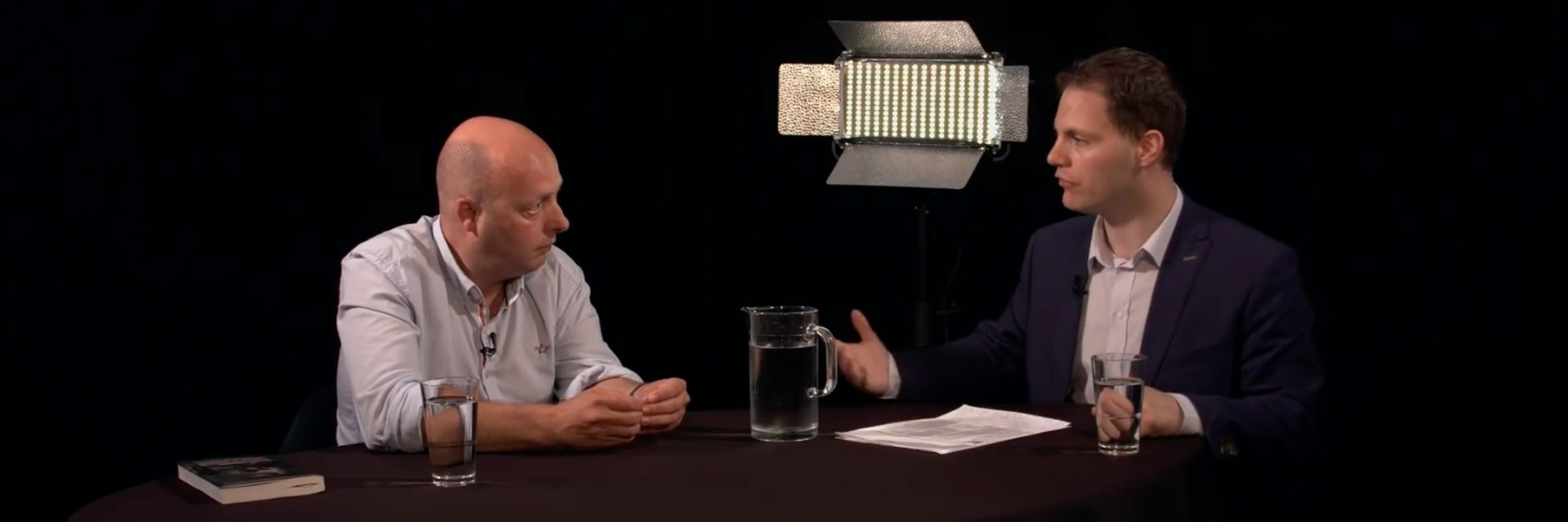
The documentary on the Elected Mayor:
https://www.youtube.com/watch?v=-lO_BYy2z_U
Actually, yes. Printing has become increasingly expensive, and before the book comes off the press exactly the way you want it, you usually have to go through several proof editions.
My intention is to send every supporter who contributes above the break-even amount a personally signed copy by post. As a private individual, this is both time-consuming and costly.
The simplest solution is for people to attend the launch event, where supporters can receive their copy in person. But that also comes at a cost, since it means there is little or no profit to be made from the book itself.
Online sales are also disappointing, because they require you to keep promoting your own book indefinitely – time that is then taken away from other projects.
Another problem is that there are simply no outside parties consistently promoting my books. As a result, I earn little to nothing from them after publication, which makes crowdfunding absolutely essential.
Over all these years, nobody has managed to solve this problem. Nevertheless, I still feel a genuine calling as a writer to develop my ideas and the fascinating conversations I have into books.
In any case, if a book is sold through retailers such as Bol.com, an author may receive only between 23 and 80 euro cents per copy. If a book sells fewer than one hundred copies a year, publishers often do not even bother keeping track of the royalties, meaning the author receives nothing.
An author can inquire about this, but to truly get publishers to take action, you often have to threaten legal proceedings. That costs more than the hundred or two hundred euros those passive annual sales might generate, while also poisoning the relationship.
So in the end, you become a writer largely for the joy of presenting your book to readers.
To be completely honest, considering the amount of work involved, €15,000 is actually on the low side (especially since part of it goes toward VAT and platform fees). I can only afford to devote this amount of time to the project because I do not have a family to support.
Of course not – are you trying to insult the author by asking that?!
Most chapters emerge from epic conversations with friends, supporters, and donors. I often take notes during these discussions. Just as often, grand ideas arise spontaneously while reading thick, old books written by serious philosophers.
I see it as my task to unlock that sense of grandeur for ordinary people in an age of fleeting attention, and to keep at least a small spark alive for future generations.
As I have said before, I receive ZERO support from public institutions in pursuing this work.
YES.
I will personally make sure that it is.
I will also do my best to bring back the “usual suspects” – Joris, Matthieu, and others – so that the event will be not only epic, but nostalgic as well.
Perhaps – if fortune smiles upon us.
At the moment, the writer is looking for a Muse to accompany him during and after the event.
But first things first…
First the book.
First the funding.
So for now, the ball is in your court.
On a meta-level, politics is struggling with three fundamental problems.
First, geopolitical pressure – from Russia, China, the United States, among others – is forcing the European Union to reinvent itself in light of its own growing impotence and irrelevance.
Given everything that is unfolding – the population boom in Africa, the war with Russia, China’s rise, and America’s geopolitical reorientation – European nations will have to develop a long-term geopolitical strategy if they wish to remain viable.
What is lacking, however, is both the will and the vision to accomplish this.
Second, the European Union possesses no compelling founding narrative, no creative myth capable of inspiring and uniting its citizens.
The EU is a sterile bureaucratic behemoth: a collection of transnational treaties gradually expanded into its own governing entity.
Virtually no one feels emotionally attached to it, and in its current form scarcely any European citizen passionately embraces it.
Compliance is enforced through regulation, surveillance, and repression.
This only deepens feelings of powerlessness, apathy, and alienation.
Third, the narratives that do exist to “inspire” citizens are, at their core, narratives of domination (Herrschaft) and oppression that derive, directly or indirectly, from the Frankfurt School.
They endlessly recycle historical grievances concerning supposedly victimized groups and even nature itself, portrayed as something sacrificed by humanity.
Such narratives derive their meaning from a historical context that is rapidly losing relevance as people face more immediate concerns – such as the disappearance of the middle class through globalization.
Moreover, no one can draw genuine strength or confidence from them.
And so, to draw the conclusion:
Politicians of every persuasion – from left to right, from progressive to conservative – ought to confront these three issues directly and acknowledge them.
They ought to say:
“Sid, we condemned you all these years – but all along, you were right.”
When we look one another in the eye, we know that little is likely to improve under the present circumstances.
It therefore falls to us – in the bond between writer and reader – to seek meaning and purpose on a personal level amid a chaotic age.
That is why I am writing this book:
Meaning Amid Chaos.
The title also carries a note of Schadenfreude: the grim satisfaction some people experience as this bureaucratic house of cards begins to collapse.
We’ll do our best to make it happen!
With fries and satay – charged to Patricia. 😉
Support Sid via BackMe:
https://sidlukkassen.backme.org/
Follow me on Telegram:
https://t.me/SidLukkassen
Subscribe to my email newsletter:
https://www.sidlukkassen.com/
Follow me on X:
https://x.com/Sid_Lukkassen
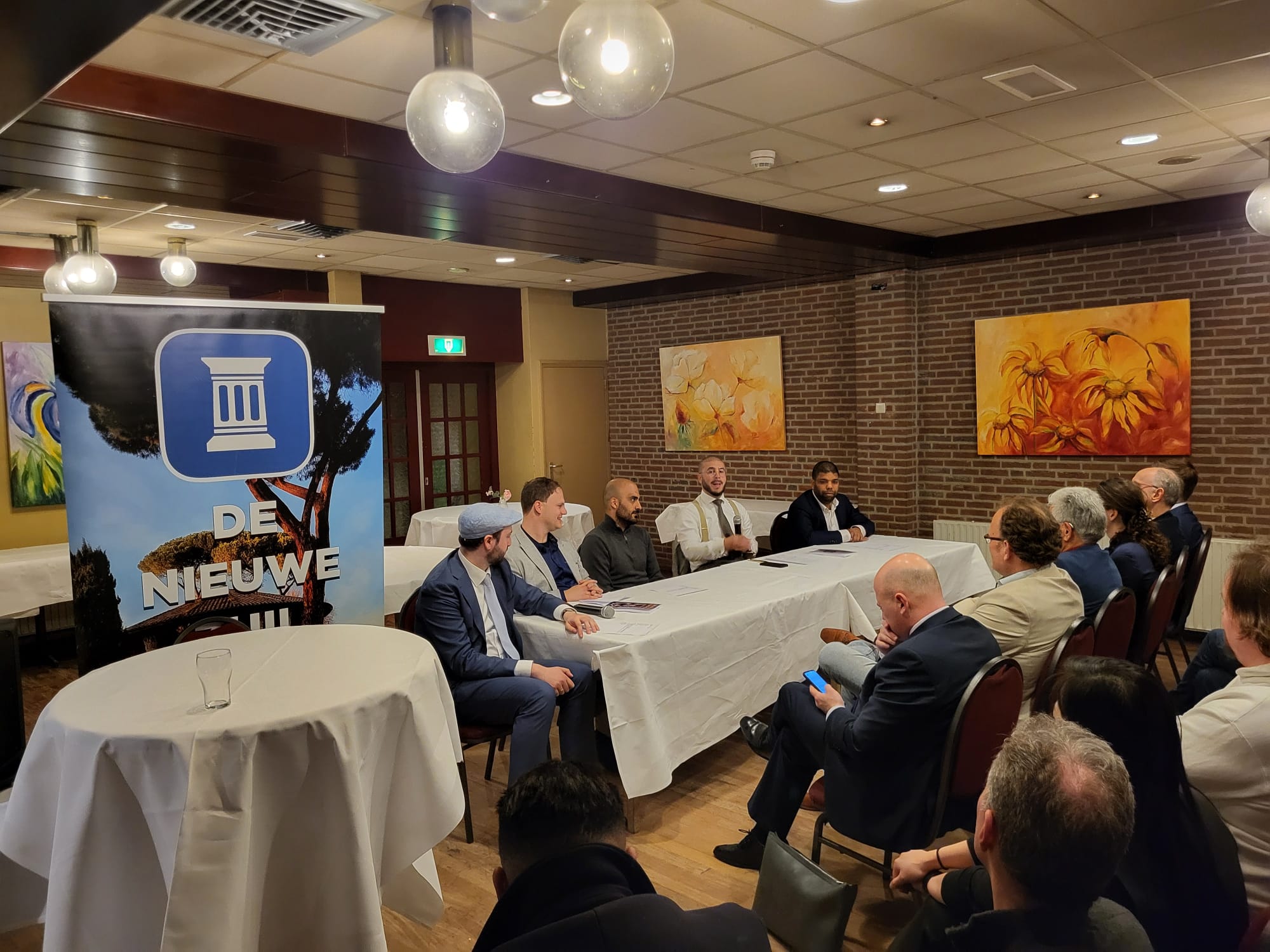
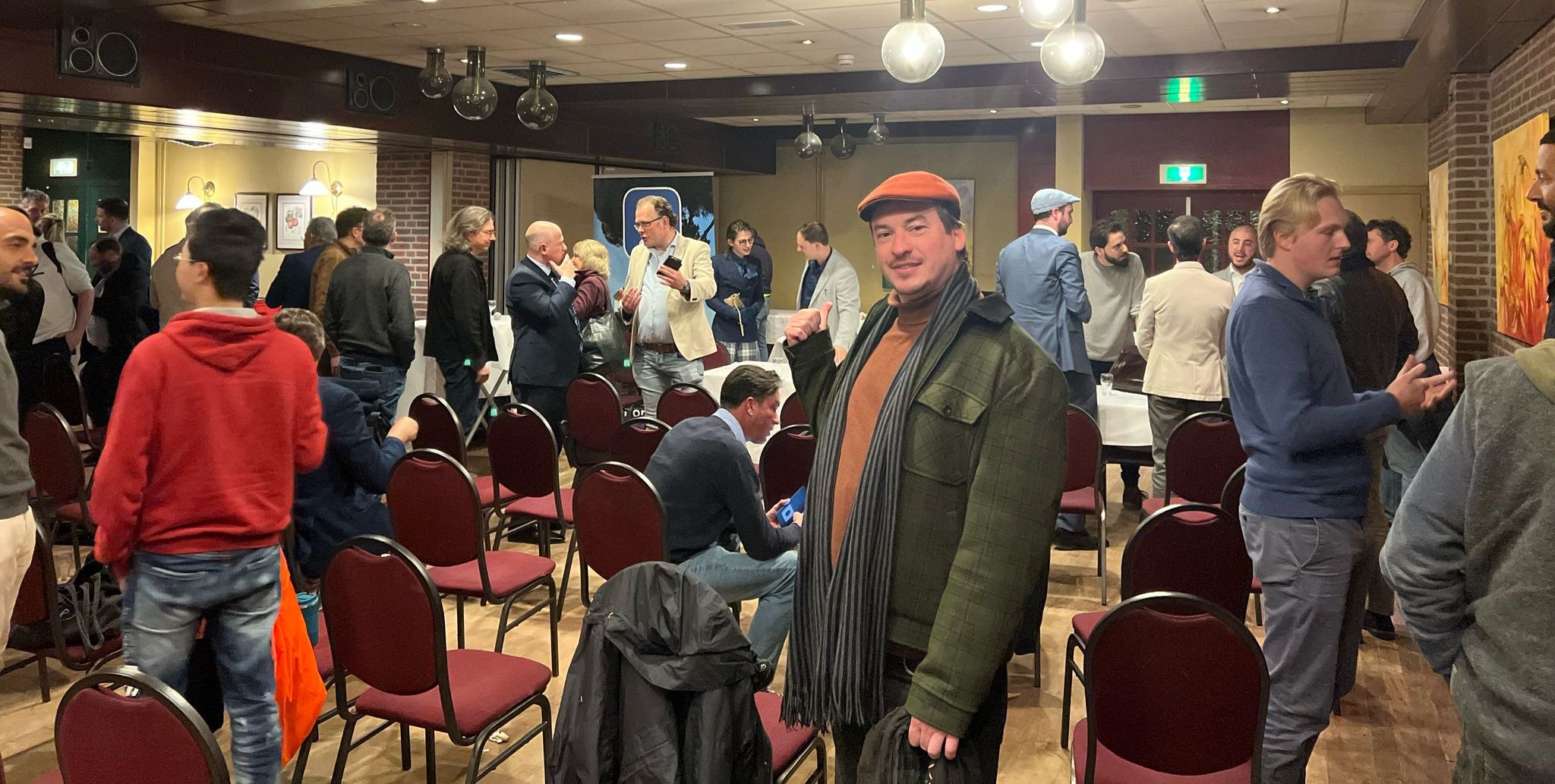
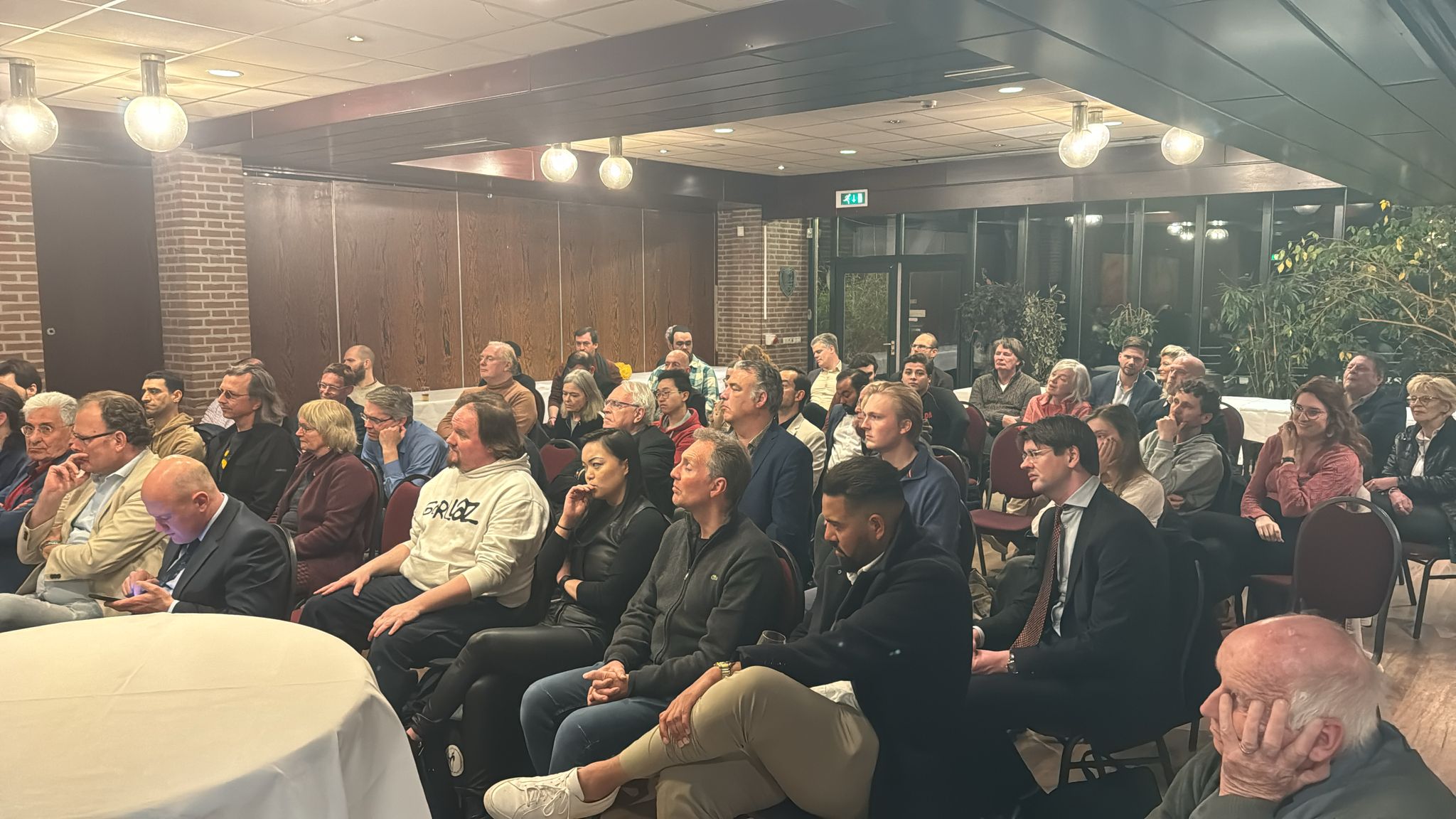
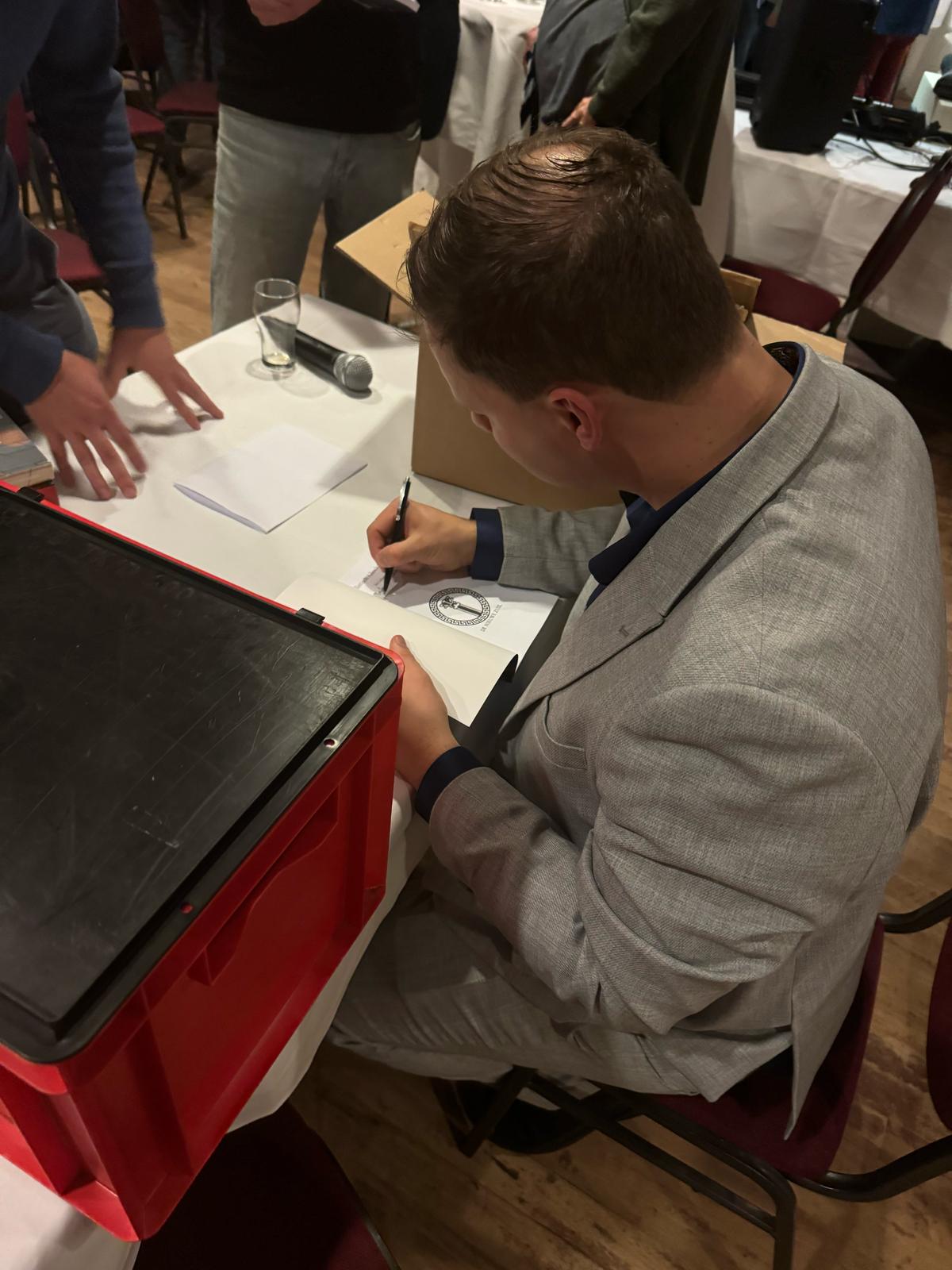
Below you’ll find photographs from the launch of Realistisch Allochtoon, another book that was published through crowdfunding on this platform.
It demonstrates that my projects successfully bring people together.
Connecting Realism.
Hier kan je reageren op onze artikelen en een inhoudelijke bijdrage leveren. Lees ook even onze huisregels.
Om te reageren dien je eerst aan te melden.
Reageer je voor de eerste keer? Registreer je dan hier.