Many people are so tired, weary, worn down by work and the daily grind, that they no longer wish to participate in society. They want a big pile of money, enough to say: “see you later!”, and to live outside of the workforce, retiring early. The theme of “Fuck You Money”, has become “Quit Society Money”. This discussion started with an X-post by Anna Khachiyan, who wrote: “The only kind of money that counts is Quit Society Money.”
It made me wonder: Why do people even want this, and will we be actually happier and better off once we do reach that “outsider” position?
Origins of the underlying desire
I then discussed this question with ‘Auguste Prompt’, whom, for readability and convenience, as well as adherence to the Western philosophical canon, will be called ‘Auguste Comte’. He made the connection between the desire to quit society, and the gloomy prospects that Western nations face in the imminent future.
Comte asked me if my question was about how to make that kind of money, how to spend it, or why the desire for this kind of money is now suddenly a thing. I replied that I want to analyze the “Quit Society Money”-phenomenon philosophically and existentially – in the broadest possible sense. This brought about a fascinating, insightful exchange of ideas that this article presents to the world.
Before we read on – if you have a minute, please consider my new crowdfunding project, where I aim to write a book about how to find meaning and purpose in chaotic times. The page contains a description of my goal: I want to analyse the works of previous canonical philosophers to distil universal lessons from their works.
Sid Lukkassen: If you express that you no longer wish to work, and even if you reach a point where you no longer have to work and can actually “quit society”, then you probably say that in a situation where you hate your job or feel totally exhausted.
But then you quit your job and six months later, you realize that what you really wanted was not “never having to work again.” Instead, you want a meaningful job, where you feel you are valued, and where you contribute something useful. And that feeling of “not fitting in” and “not being useful” and “not being integrated/valued”, builds and becomes stronger. You may therefore end up even more depressed than you were in your exhausting job…
Auguste Comte: My personal situation is probably unusual, but I understand your point completely. I think that over the next decade, many people will find themselves in this position due to the impact of AI. We are going to live through a great social upheaval and few are mentally prepared.
Sid Lukkassen: Let’s go deeper into that aspect.
If I follow this scenario: Artificial Intelligence will make most work redundant/inaccessible or downright take it out of the hands of humans… Then humans will need to find other ways to entertain themselves. Say… Art.
But then AI has already been drawing pictures for kids from the day they were born… They do not even know how to make drawings with crayons on the street tiles, as their imagination AND their fine motor skills have been largely supplanted by AI-environments.
Now let’s take myself as a highly educated guy… I like to think about these super abstract topics. How areas such as religion, mythology, technology and Artificial Intelligence interact and affect each other. But then the problem is, finding people who like to talk about these things in an open-minded way… instead of just pushing a fixed ideology.
One stage further is finding a partner – someone with whom you feel genuinely connected, emotionally AND intellectually… A level beyond the superficiality. One needs a deep, cultivated mind to endure the post-work era – I mean a lively ‘inner world’ to keep yourself human and entertained in an epoch where most work is removed from our lives. At that point: good luck finding a partner who can even comprehend what I am talking about here… So even if one has “Fuck Society – I Quit!”-money, it hardly answers these challenges.
Auguste Comte: I think “Quit Society Money” expresses a yearning for total independence, which taken literally is not possible.
However, most people have a sense of foreboding over how the next decade is going to play out and desire security.
There’s a brewing ethnic civil war in the West because of mass immigration. It will be either remigration, or the West will gradually slide into becoming the third world. Both options seem violent to me.
Compound that with a catastrophic economic situation that has heavily disadvantaged anyone under 40. Basic life has become so unaffordable and fertility rates have collapsed. A third to half of 20- and 30-year-olds live with their parents. Add in all the disruption from AI and it paints quite a destabilizing view of the near future.
The desire for “Quit Society Money” reflects this, at least implicitly. Only a decade ago it was “Fuck You Money”. The “permanent underclass” is another recent meme reflecting this.
Sid Lukkassen: I agree wholeheartedly with everything you have written here. It is a truly concise summary, I’d say beautiful if the reality it describes were not so horrendously tragic.
Alright – we can agree upon these things. West-Europe is becoming a totalitarian surveillance state. Society ages and there is literally no room for new elites. So the elites that exist, lock everything down with ideological purity and there is no way to reach through to them with actual grounded reality.
Coming from me, who worked – among things – as a PhD researcher and lecturer at the Radboud University Nijmegen, then as a policy advisor at the European Parliament, having worked for ALDE and ECR, and even wrote books that the Prime Minister (Mark Rutte, who is now NATO Secretary General) received… And I was on national TV a couple of times, etc.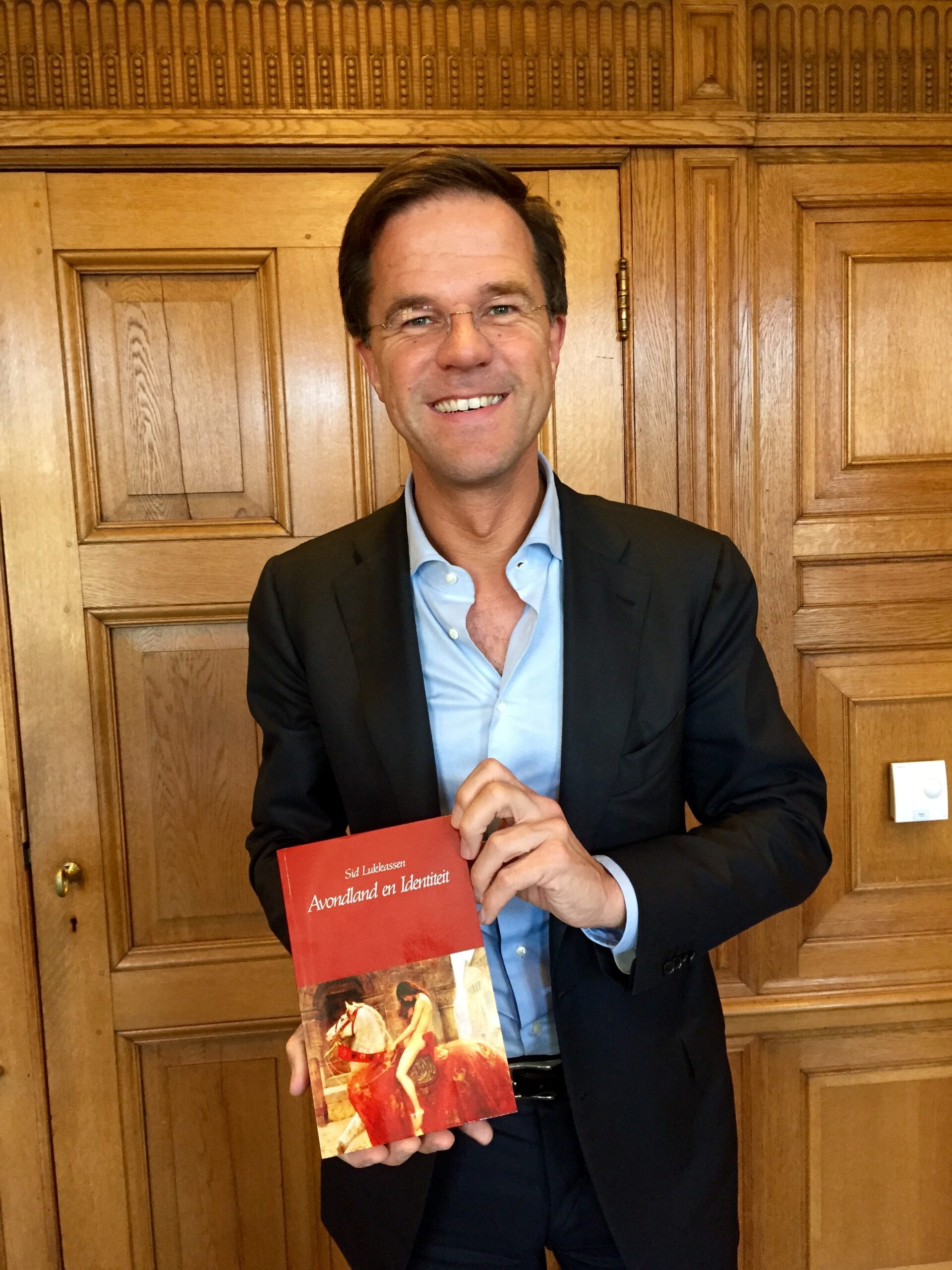
But I realized that I could make no meaningful difference and the very people who were supposed to support me worked against me. Both academically and politically.
Drawing the honest conclusions, I decided to pull my act together and I moved to South America. Which is where I am now.
This chain of events leads me to reflect upon the question to what extent I have actually “quit society”. I struggle with the motive of being useful, feeling that my talents are valued… Which is part of the depression that ultimately drove me to leave Europe, besides all the obvious material problems, the political pressure, the unaffordable houses… All of this is much better in South America. But it is still not enough to feel ‘fulfilled’ in a spiritual and psychological sense. Even if the material living conditions are objectively better, as one just has more comfort and value for one’s money than in Europe.
Which throws me back upon the question, what it means to “quit society” and even if someone says: “I want Quit Society Money” – what are they really expressing with that wish?
Auguste Comte: Interesting – I left for South America too. I don’t want to be in the United Kingdom or Europe once the shit hits the fan. I am between Buenos Aires and Uruguay. I do what I can to help with things back home, but the Communists seem determined to destroy it all.
Sid Lukkassen: What can I say – they are, and they will.
And you can stay in Europe and “endure the fate of your people”, as Viktor Frankl and Etty Hillesum have done, who for this reason chose to remain with their people despite foreseeing the dangers that awaited them. But the chance is super big that we’d end up looking back upon that suffering, realizing that the collapse was inevitable and that we have subjected ourselves to pointless suffering that was totally useless and avoidable.
Auguste Comte: It is therefore quite a common theme that the highest IQ people I know are all either [1] fully locked in and building or investing in AI. Their goal is to work towards generational wealth in the midst of a new technological revolution. Or [2] fully checked out of society and the corporate rat race. They are quitting their job, deleting social media and moving to the middle of nowhere to live a quiet life with no distractions.
There are literally no options in between.
Sid Lukkassen: To conclude this discussion, I think that even if you live in the countryside, you will again be confronted with the same existential questions that I mentioned. With whom do I share this ‘quiet’ existence in a meaningful connection? How do I deal with a nagging sense that my talents do not come to fruition? And what will you do once technology and totalitarian surveillance become so dominant that the powers that be reach into that quiet existence and penetrate your peace of mind from the outside?
So I do think that this idea to accumulate wealth while you still can, is sound. Even if labour will be replaced by machines, those machines will still need to respect property rules, supposedly, to get to the mines, the farmlands – people still need space to live and houses will still need to be built. Property will therefore remain valuable, and those who own the means of production will have more power and therefore more options, than those who will not own.
If you found this discussion valuable, please consider donating to Sid’s crowdfunding and the book he is writing, Zin in Chaos, which engages with the quest for meaning in turbulent times.
Final thoughts: When it comes to, what makes humans happy/fulfilled, there are two essential components: one is independence or autonomy, a sense of being in command of one’s own existence; another one is connectedness, a sense of belonging, being a valued and productive member of a community. Both are essential human needs. Yet in an era of AI and ‘winner takes all’-globalism, it somehow seems impossible to balance or reconcile them.
Hier kan je reageren op onze artikelen en een inhoudelijke bijdrage leveren. Lees ook even onze huisregels.
Om te reageren dien je eerst aan te melden.
Reageer je voor de eerste keer? Registreer je dan hier.